


 Back to
Topics
Back to
Topics



Author-Gary Moore

Last updated-May 30, 2026
Ever used a service that worked perfectly on paper but still left you frustrated? Maybe the issue was resolved quickly, yet the support experience felt confusing or impersonal. This is where understanding XLA vs SLA becomes important, as businesses today must focus not only on technical performance but also on user satisfaction.
As customer expectations continue to rise, understanding XLA vs SLA has become more important in modern Service Management. This blog explains their key differences, benefits, and how both frameworks work together to improve service quality.
What is XLA?
An Experience Level Agreement (XLA) is a framework used to measure and improve how user experience a service during service interactions. Unlike traditional service measurements that mainly focus on technical performance, XLA evaluates customer satisfaction, ease of use, sentiment, and overall service perception.
XLA helps organisations understand how users feel about a service and identify areas that need improvement. It focuses on creating positive experiences by measuring factors such as feedback, satisfaction levels, usability, and emotional response during service delivery.

Advantages of XLA
XLA helps organisations improve user experience and customer satisfaction alongside technical performance. These are the key advantages of using XLA:
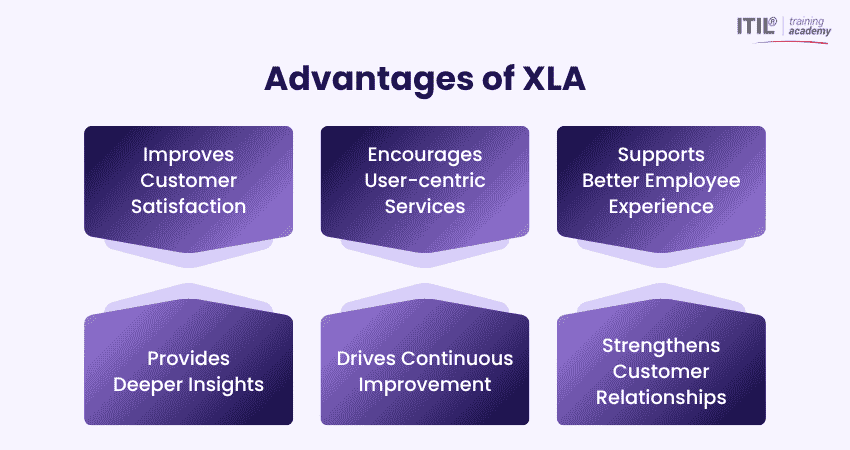
1) Improves Customer Satisfaction:
XLA helps organisations understand how users feel about a service, allowing businesses to improve customer satisfaction and overall service experience.
2) Encourages User-centric Services:
XLA focuses on user needs and expectations rather than only technical performance, helping organisations create more user-friendly services.
3) Supports Better Employee Experience:
By identifying service frustrations and usability issues, XLA helps improve employee productivity and workplace experience.
4) Provides Deeper Insights:
XLA combines feedback, sentiment analysis, and experience data to give organisations a better understanding of user perceptions.
5) Drives Continuous Improvement:
Regular experience monitoring helps businesses identify improvement opportunities and enhance service quality over time.
6) Strengthens Customer Relationships:
Positive service experiences help organisations build trust, improve loyalty, and maintain stronger long-term customer relationships.
What is SLA?
A Service Level Agreement (SLA) is a formal agreement between a service provider and a customer that defines the expected level of service performance. It includes specific metrics such as uptime, response time, issue resolution time, and service availability to ensure services are delivered consistently.
SLAs help organisations set clear expectations, maintain accountability, and monitor service performance effectively. They also outline responsibilities, reporting processes, and possible remedies or penalties if agreed service standards are not achieved.
Advantages of SLA
SLAs help organisations maintain service reliability, operational efficiency, and clear performance expectations. The following points highlight the key advantages of using SLA:
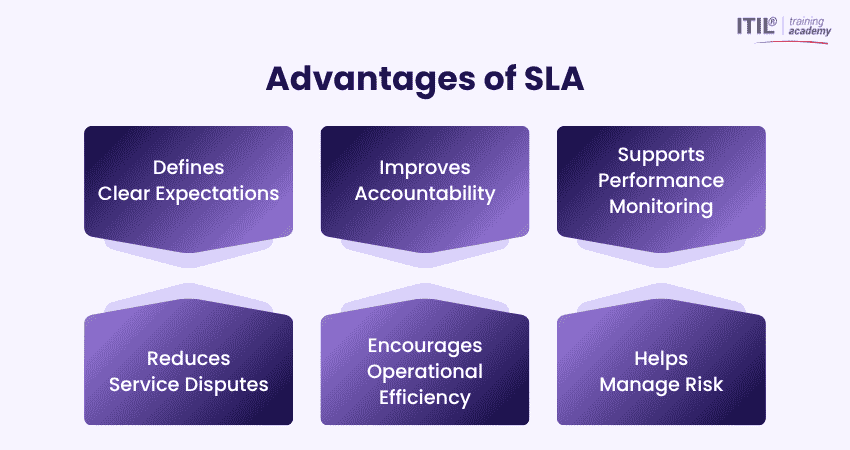
1) Defines Clear Expectations:
SLAs clearly outline service targets, responsibilities, and expected performance levels between providers and customers.
2) Improves Accountability:
Service providers become responsible for maintaining agreed service standards and operational performance.
3) Supports Performance Monitoring:
SLAs use measurable metrics such as uptime and response time to track service quality effectively.
4) Reduces Service Disputes:
Clearly defined agreements help minimise misunderstandings related to service delivery and responsibilities.
5) Encourages Operational Efficiency:
Teams work towards measurable goals, improving consistency and overall service performance.
6) Helps Manage Risk:
SLAs provide structured processes for handling service failures, disruptions, and operational issues effectively.
Learn core ITIL concepts to improve service quality and operational efficiency with the
ITIL® Foundation Level Training
– Sign up now!
XLA vs SLA: Key Differences
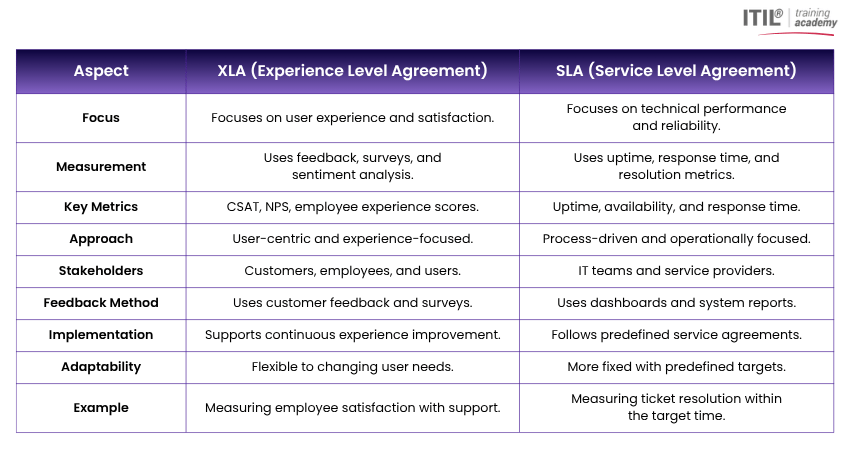
When comparing XLA vs SLA, the main difference is their focus. SLA measures technical performance and reliability, while XLA focuses on user experience and customer satisfaction. The following points explain the key differences between SLA vs XLA frameworks:
1) Focus and Approach
SLAs mainly focus on technical performance and operational efficiency within IT and service environments. They measure whether systems, applications, and support services consistently meet predefined service targets, response times, and availability standards agreed between providers and customers.
XLAs focus more on user experience, satisfaction, and service perception during interactions. Instead of only tracking technical performance, XLAs evaluate how users feel about the service and whether it supports positive and seamless customer experiences effectively.
2) Measurement Method
SLAs use measurable technical metrics such as uptime, response time, and issue resolution time to evaluate operational performance. These measurements are usually monitored through automated systems, dashboards, and service reports that provide objective and performance-focused operational insights.
XLAs combine quantitative and qualitative measurements, including surveys, customer feedback, and sentiment analysis tools. This approach helps organisations understand the emotional, practical, and behavioural impact services have on users during their interactions and daily experiences.
3) Business Alignment
SLAs support operational stability by ensuring services consistently meet contractual obligations and technical performance standards. Their primary focus is on maintaining system reliability, reducing downtime, and supporting efficient service delivery across business operations and technical environments effectively.
XLAs align more closely with business goals related to customer satisfaction, employee engagement, and digital experience quality. They help organisations improve loyalty, productivity, and overall user satisfaction by focusing on human experiences rather than only operational outcomes.
4) Accountability and Ownership
SLA responsibility usually belongs to IT teams or service providers who manage operational service performance. Their main goal is to achieve agreed technical targets while maintaining service reliability, compliance, and efficient support delivery across systems and applications consistently.
XLA ownership is often shared across departments such as IT, HR, customer support, and business leadership teams. This collaborative approach helps organisations improve user experiences by involving multiple teams in service design, feedback analysis, and continuous improvement activities.
5) Continuous Improvement
SLAs mainly ensure that minimum performance standards are consistently achieved during service delivery and operational management. Although SLAs can support improvement, they primarily focus on maintaining measurable service commitments.
XLAs encourage continuous evaluation and improvement through regular feedback collection and experience monitoring activities. Businesses identify service pain points, improve user interactions, and adapt experiences continuously to meet changing customer expectations and business requirements more effectively.
Stay aligned with evolving digital Service Management and governance practices with the
ITIL® Version 5 Foundation Bridge Training
– Join today!
Why Use XLAs and SLAs Together?
Using XLAs with SLAs helps organisations balance technical performance with user experience. The following points highlight the key benefits of combining both frameworks:
1) Enhance User Satisfaction:
SLAs mainly focus on technical performance such as uptime and response time, but they may not reflect actual user experience. XLAs help organisations measure customer satisfaction and understand how users feel during service interactions.
2) Improve Service Quality:
SLAs ensure minimum service standards are achieved, while XLAs encourage businesses to focus on overall service experience. This helps organisations deliver more user-friendly and customer-focused services.
3) Drive Operational Excellence:
XLAs provide deeper insights into user behaviour, feedback, and service perception. Organisations can use this information to improve processes, identify recurring issues, and continuously enhance ITIL Service Delivery.
4) Support Better Decision-making:
Combining SLA and XLA metrics gives businesses a balanced understanding of both technical performance and user experience. This helps organisations make more informed service improvement decisions.
5) Strengthen Customer Relationships:
Positive service experiences improve customer trust, loyalty, and long-term business relationships. XLAs help organisations create experiences that better meet customer expectations.
How Can XLA and SLA Work Together?
XLA and SLA work together by combining technical performance with user experience measurement. Understanding XLA vs SLA helps organisations deliver reliable and user-friendly services. The following practices explain how both frameworks work together effectively:
1) Set Clear Objectives
Organisations should define clear operational and experience-related goals before implementing SLA and XLA frameworks effectively. These objectives help teams understand expected service performance, customer expectations, and desired user outcomes while supporting structured and measurable Service Management processes.
Balanced objectives improve overall service quality by combining technical efficiency with customer satisfaction goals. This approach helps organisations deliver services that support operational performance while also creating positive, reliable, and user-friendly experiences for customers and employees consistently.
2) Align Metrics with User Experience
Technical service metrics should directly contribute to improving overall customer and employee experiences during service interactions. Organisations must ensure operational targets such as response time and availability positively affect user satisfaction, convenience, and productivity across business environments consistently.
For example, faster issue resolution and improved system availability can significantly enhance user productivity and convenience. Aligning technical metrics with experience-focused goals helps businesses create meaningful service improvements that benefit both operational performance and customer satisfaction.
Gain practical ITIL knowledge to improve service quality and business value through the
ITIL® Version 5 Foundation Certification Training
– Join today!
3) Include Customer Feedback
Customer feedback plays a crucial role in understanding how users experience services during daily interactions and support processes. Organisations can collect valuable feedback through surveys, interviews, digital monitoring tools, and direct communication channels to improve overall service quality effectively.
This information helps businesses identify hidden service issues, usability challenges, and customer frustrations more accurately. Regular feedback collection also supports continuous service improvement while strengthening customer relationships and improving satisfaction across different business and service environments consistently.
4) Conduct Collaborative Service Reviews
Service reviews should involve technical teams, business departments, and customer support representatives working together collaboratively. This approach helps organisations evaluate both operational performance and user experience quality while encouraging better communication across different teams and Service Management functions effectively.
Collaborative discussions support shared responsibility for identifying challenges, reviewing customer feedback, and implementing practical improvements. Teams can work together to improve service delivery, solve recurring problems, and create better experiences that align with organisational and customer expectations consistently.
5) Support Continuous Improvement
Businesses should regularly review service performance and user experience metrics to identify opportunities for improvement effectively. Continuous monitoring helps organisations adapt services according to changing customer expectations, operational challenges, and evolving business requirements within modern digital environments consistently.
This proactive approach reduces recurring service issues and improves operational efficiency over time significantly. Organisations can maintain better customer experiences, improve service quality, and support long-term business success through ongoing evaluation, monitoring, and continuous service improvement initiatives effectively.
6) Use a Balanced Scorecard Approach
A balanced scorecard approach combines technical service metrics with customer experience measurements to provide complete performance insights. This method helps organisations evaluate services from operational, customer, and business perspectives while maintaining balanced and comprehensive Service Management practices consistently.
Using SLA and XLA metrics together supports better decision-making, performance evaluation, and service improvement planning processes. Businesses can maintain technical reliability while also delivering positive, user-friendly, and experience-focused services that support long-term organisational growth and customer satisfaction.
Conclusion
Understanding XLA vs SLA helps organisations balance technical performance with user experience. While SLAs ensure operational reliability, XLAs focus on customer satisfaction and service perception. Together, they help businesses improve service quality, strengthen customer relationships, and deliver more user-friendly experiences.
Gain confidence in driving organisational digital strategy and growth with the ITIL® Strategic Leader (SL) Training – Join now!
Frequently Asked Questions?
The three main types of SLAs are Customer-based SLA, Service-based SLA, and Multi-level SLA. A Customer-based SLA covers one customer, a Service-based SLA applies to one service for all users, and a Multi-level SLA combines different service levels for various customers or departments.
An example of XLA is measuring employee satisfaction after an IT support interaction. Along with tracking ticket resolution time, organisations also collect feedback on communication, ease of support, and overall user experience to understand how satisfied employees feel with the service.
Common tools for measuring XLA metrics include ITSM platforms, survey tools, digital experience platforms, and workplace analytics tools. Examples include ServiceNow, Nexthink, Qualtrics, HappySignals, and Microsoft Viva Insights. These tools help organisations collect user feedback, monitor digital experiences, analyse satisfaction, and track employee or customer experience performance.
Most Recent
Date - Aug 1, 2026
Date - Jul 18, 2026
Date - Jul 11, 2026