


 Back to
Topics
Back to
Topics



Author-David Walter

Last updated-May 16, 2026
Customers expect fast, reliable digital services, but how are these standards maintained? Modern organisations depend on service providers for IT support, cloud services, and customer assistance. To ensure these services remain reliable and consistent, organisations rely on Service Level Agreements (SLAs). These agreements help define expectations such as server uptime, quick issue resolution, and seamless digital operations.
In this blog, we will explore what a Service Level Agreement is, its key components, different types, and best practices for building strong and effective service relationships. Let’s get started!
What is a Service Level Agreement (SLA)?
A Service Level Agreement (SLA) is a documented contract between a service provider and a customer that defines the expected level of service. It clearly states responsibilities, performance standards, response times, availability targets and penalties or remedies if the agreed service levels are not achieved.
An SLA ensures that both parties understand what is expected from the service relationship. It creates accountability and helps measure performance objectively. SLAs are widely used in industries such as Information Technology (IT), telecommunications, cloud services, customer support and more.
Why are SLAs Important?
Service Level Agreements are important because they create clear expectations between service providers and customers. They provide a clear structure for how services should be delivered, monitored and managed.
They define the quality of service, response times, responsibilities and performance standards that must be maintained. SLAs also make it easier to track performance and identify areas that need improvement. Moreover, they support better communication and help organisations handle service-related issues more efficiently.
Key Components of an SLA
An effective SLA needs to have detailed information about the service relationship. The following components are commonly included in SLAs: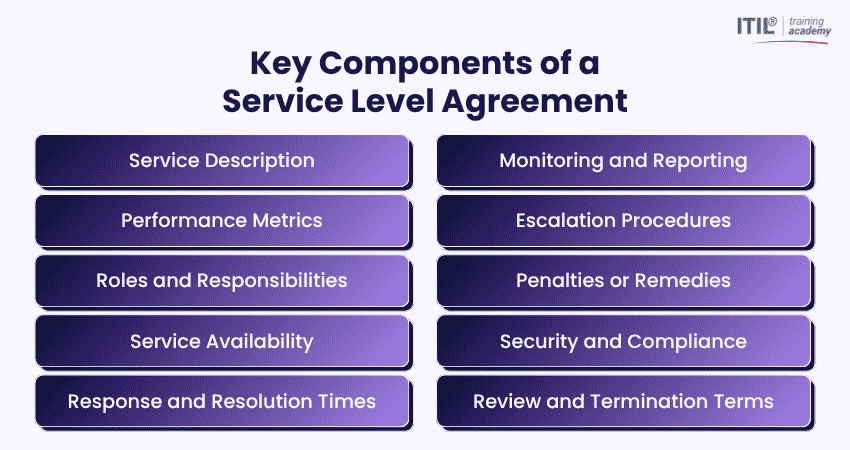
1) Service Description:
Explains the services provided, including the scope, features and limitations of the agreement.
2) Performance Metrics:
Defines the measurements used to evaluate service quality, such as uptime, response time and resolution time.
3) Roles and Responsibilities:
Clearly states the duties and responsibilities of both the service provider and the customer.
4) Service Availability:
Specifies when and how the services will be available, such as 24/7 support or business-hour availability.
5) Response and Resolution Times:
Outlines how quickly the provider must respond to issues and how long it should take to resolve them.
6) Monitoring and Reporting:
Explains how service performance will be tracked, measured and shared with customers.
7) Escalation Procedures:
Defines the steps to follow if service issues are not resolved within the agreed timeframe.
8) Penalties or Remedies:
Includes compensation, service credits or corrective actions if agreed service levels are not achieved.
9) Security and Compliance:
Covers data protection, security requirements and regulatory obligations.
10) Review and Termination Terms:
Explains how often the SLA will be reviewed and the conditions for modifying or ending the agreement.
Types of Service Level Agreements
Service Level Agreements can be structured in different ways depending on the type of service, customer requirements and business operations. Below are its types:
1) Customer-level SLA
A customer-level SLA is designed for a specific customer or client. It covers all services provided to that particular customer under a single agreement. This type of SLA is highly personalised and tailored to customer requirements.
For example, an IT support company may create a customised SLA for a large corporate client covering technical support, maintenance and cybersecurity services.
2) Service-level SLA
A service-level SLA applies to a specific service offered to multiple customers. Every customer receiving the service follows the same agreement terms. This approach simplifies service management because the same standards apply across all customers.
For example, a cloud storage provider may guarantees 99.95% uptime for all users using its premium hosting service.
3) Multilevel SLA
A multilevel SLA combines multiple layers of agreements to address different customer and service requirements. It typically includes corporate-level agreements that apply to the entire organisation, customer-level agreements and service-level agreements.
For example, a multinational company may have company-wide IT policies alongside department-specific service agreements.
Manage and optimise digital products successfully with
ITIL® 5 Product Certification Training
Register today!
How to Write a Service Level Agreement?
Creating an effective Service Level Agreement requires careful planning and communication between the service provider and the customer. The following steps can help organisations create a clear and practical SLA:
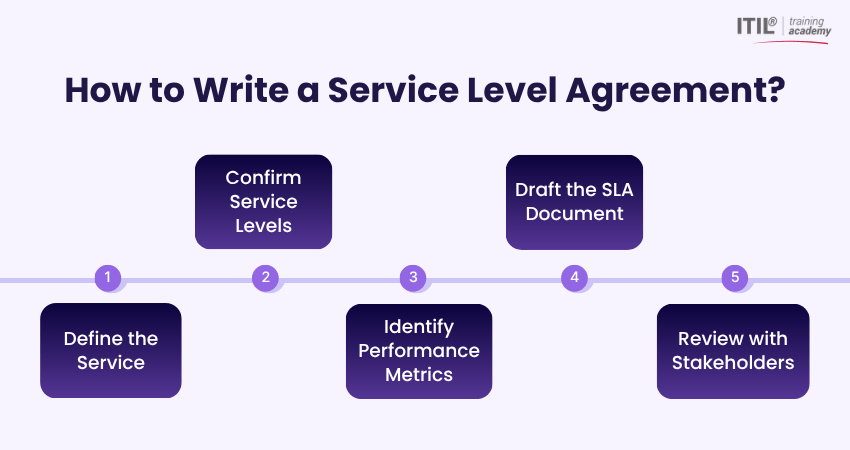
1) Define the Service
The first step is to clearly define the service being provided. This section should explain what is included in the agreement and what services are excluded. It should also identify all stakeholders and their responsibilities. Key areas to include are:
1) List of stakeholders and points of contact
2) Scope of services provided
3) Services excluded from the agreement
4) Customer responsibilities and payment terms
5) Vendor responsibilities and support commitments
6) Conditions for cancellation or termination
A detailed service description helps both parties understand exactly what they can expect from the agreement and reduces confusion later.
2) Confirm Service Levels
After defining the service, the next step is to confirm the service levels that must be maintained. Service levels are measurable standards used to evaluate service quality and provider performance. Common service levels may include:
1) System uptime percentage
2) Response time for support requests
3) Issue resolution time
4) Service availability
5) Delivery timelines
Clearly defining service levels helps providers maintain consistent performance and allows customers to measure service quality effectively.
3) Identify Performance Metrics
Performance metrics help measure whether the agreed service levels are being achieved successfully. These metrics should be easy to monitor and directly connected to service quality. Common SLA metrics include:
1) First response time
2) Mean Time to Resolution (MTTR)
3) Customer satisfaction scores
4) Error rates
5) Quality of service output
Choosing the right metrics helps organisations monitor performance and identify areas that need improvement.
4) Draft the SLA Document
After defining the services and metrics, the SLA should be written as a formal document. The language used should be simple, clear and easy to understand so that both parties can follow the agreement without confusion. A standard SLA document usually includes:
1) Agreement overview
2) List of stakeholders
3) Goals and expectations
4) Description of services
5) Service levels
6) Excluded services
7) Cancellation conditions
8) Escalation procedures
9) Corrective actions if goals are not met
10) Performance metrics and reporting methods
Using a basic SLA template can help organisations customise agreements efficiently for different customers and services.
5) Review with Stakeholders
Before finalising the SLA, it should be reviewed with all stakeholders involved in the service relationship. This ensures that responsibilities, service expectations and deliverables are clearly understood by everyone involved. The review process may involve:
1) Customers
2) Service providers
3) Technical teams
4) Managers
5) Legal departments
All of these stakeholders have to provide feedback and suggest changes if needed. Once everyone agrees to the terms, the SLA can be approved, signed and shared with all parties.
Enhance your skills in creating seamless, customer-focused digital experiences with
ITIL® 5 Experience Certification Course
– Sign up soon!
Examples of SLA in Different Industries
Let’s now check out the examples of how SLAs are used across various industries and sectors:
1) Information Technology (IT)
An IT support company may provide a 24/7 support SLA for a corporate client. The agreement could guarantee:
1) Critical issues resolved within 2 hours
2) 99.9% server uptime
3) Technical support available at all times
4) Monthly performance reports for system monitoring
If the provider fails to meet these targets, the customer may receive service credits or compensation.
2) Cloud Computing Services
A cloud hosting provider may offer an SLA promising 99.95% uptime for all business users. The agreement may include:
1) Automatic backups every 24 hours
2) Data recovery support during outages
3) Response to critical incidents within 30 minutes
4) Compensation if uptime falls below the agreed percentage
This helps businesses ensure their websites and applications remain available.
3) Healthcare Industry
A hospital may have an SLA with a medical software provider to maintain patient management systems. The SLA may include:
1) Immediate support for system failures
2) Daily data backups
3) 24/7 monitoring of healthcare systems
4) Maximum downtime limit during maintenance
Reliable service is essential because system failures can directly affect patient care.
Benefits of Using an SLA
Service Level Agreements provide several benefits for both service providers and customers. Let's check what those benefits are:
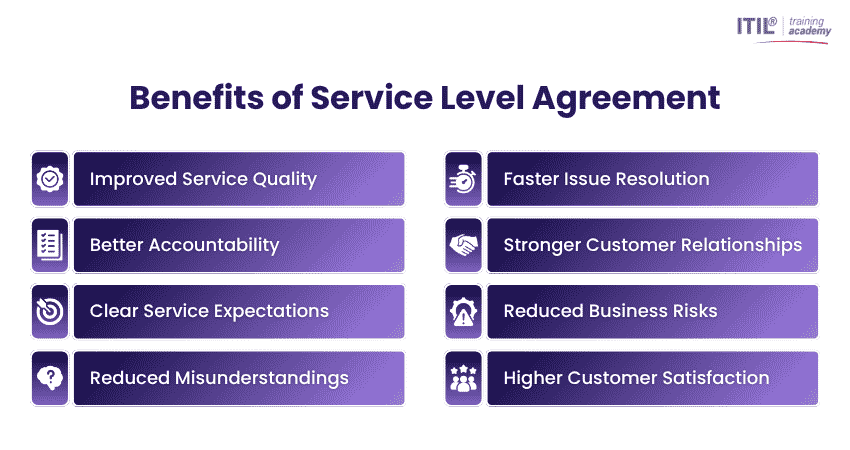
1) Improved Service Quality:
Defined performance standards encourage service providers to maintain reliable and consistent ITIL Service Delivery.
2) Better Accountability:
SLAs make providers accountable for meeting agreed service levels, response times and performance targets.
3) Clear Service Expectations:
SLAs clearly define the level of service customers can expect, helping both parties understand their responsibilities and obligations.
4) Reduced Misunderstandings:
Clear documentation helps prevent confusion and disputes between customers and service providers.
5) Faster Issue Resolution:
Defined response and resolution timelines help organisations handle problems more efficiently.
6) Stronger Customer Relationships:
Reliable service delivery and transparent communication help build customer trust and long-term business relationships.
7) Reduced Business Risks:
Clearly defined service standards and responsibilities help minimise operational disruptions and service failures.
8) Higher Customer Satisfaction:
Consistent and dependable services improve the overall customer experience and satisfaction levels.
Service Level Agreement Best Practices
To make the Service Level Agreements effective, organisations can follow some best practices such as:
1) Use Clear and Simple Language:
The SLA should be written in simple and easy-to-understand language so that all stakeholders can clearly understand the agreement.
2) Define Measurable Service Levels:
Service targets should be specific and measurable, such as uptime percentages, response times and resolution timelines.
3) Set Realistic Expectations:
The agreed service levels should be achievable and practical for both the provider and the customer.
4) Include Escalation Procedures:
The SLA should explain how issues will be handled and escalated if service targets are not met.
5) Review and Update the SLA Periodically:
SLAs should be reviewed regularly to ensure they remain relevant to changing business needs and technologies.
6) Specify Exclusions Clearly:
The agreement should clearly mention services or situations that are not covered under the SLA.
7) Encourage Stakeholder Collaboration: Customers, service providers, managers and technical teams should work together when creating and updating the SLA.
Conclusion
A Service Level Agreement plays an important role in maintaining clear and professional service relationships between providers and customers. By clearly outlining responsibilities, response times and service standards, SLAs help businesses reduce misunderstanding and establish stable service quality. As businesses continue to depend on digital services and external providers, having an effective SLA has become more important than ever.
Develop the skills required to improve IT performance with ITIL® Managing Professional Courses – Join now!
Frequently Asked Questions?
A Service Level Agreement should include measurable metrics such as:
1) Service uptime
2) Response time
3) Resolution time
4) System availability
5) Error rates
6) Customer satisfaction scores
7) Incident handling time
Any organisation that provides or receives ongoing services can benefit from an SLA. Common users include:
1) IT service providers
2) Cloud computing companies
3) Telecom providers
4) Customer support teams
5) Managed service providers
6) Outsourcing companies
7) Businesses using third-party vendors
An SLA defines the agreed service standards between a provider and a customer. It focuses on commitments such as uptime, response time, resolution time, resolution time, and service quality. On the other hand, a Key Performance Indicator (KPI) measures overall business or operational performance. KPIs are internal performance metrics used to track success.
Most Recent
Date - Aug 1, 2026
Date - Jul 18, 2026
Date - Jul 11, 2026