

 Back to
Topics
Back to
Topics



Author-Maria Thompson

Last updated-Jan 2, 2026
Technology alone does not create business value; strategy does. Many organisations invest heavily in IT tools and services but still fail to see meaningful results because services are often designed without a clear understanding of business needs and long-term goals.
ITIL Service Strategy addresses this gap by providing a structured approach to planning IT services with purpose. Aligning IT decisions with business objectives helps organisations move from reactive problem-solving to value-driven Service Management. In this blog, you will explore its meaning, processes, lifecycle and more.
What is ITIL Service Strategy?
ITIL Service Strategy is an important stage of the ITIL framework that helps to deliver IT services while aligning with your business goals and objectives. It provides guidance on designing, developing, and implementing Service Management as a strategic asset. This focuses on defining why an organisation delivers certain IT services, who those services are for, and how they create value.
At its core, ITIL Service Strategy helps organisations think like service providers. It helps IT teams understand demand, manage costs, and prioritise services that support long-term success.
Why is ITIL Service Strategy Important?
Many IT challenges stem from a lack of clear strategic direction. Services may be created because someone requests them urgently or because new technology looks attractive. Over time, this leads to wasted money, confused priorities, and services that do not truly help the business.
ITIL Service Strategy addresses this gap by providing a structured way to make informed decisions. It ensures that every IT service has a clear purpose and delivers benefits such as cost savings, better performance, reduced risks, or improved customer experience.
5 ITIL Service Strategy Processes
The ITIL Service Strategy stage includes five important processes that help organisations plan and manage IT services in the right way. These include the following: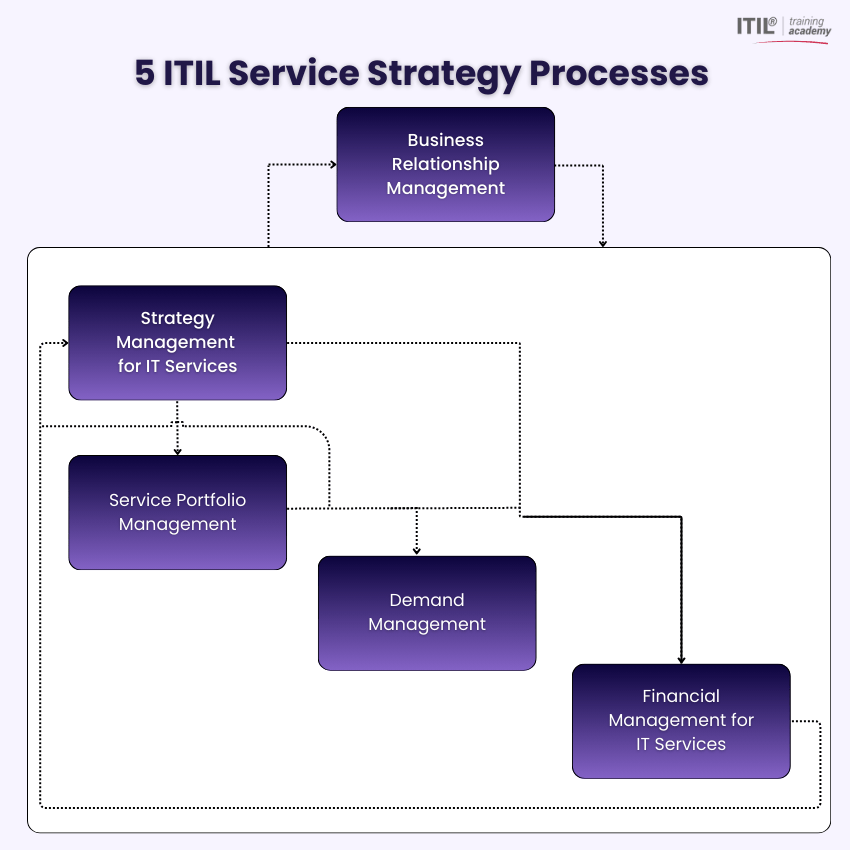
1) Strategy Management
Strategy management for IT services is the starting point of the ITIL Service Strategy. Its main goal is to make sure IT services support the organisation’s overall business goals. This process helps organisations understand where they currently stand, where they want to go, and how IT services can help them get there. It usually involves three simple steps:
1) Assessment: Review current IT services, customer needs, competitors, and market challenges or opportunities.
2) Definition: Set clear goals and decide which services to offer, improve, or remove.
3) Execution: Put the strategy into action by planning, allocating resources, and delivering the agreed initiatives.
2) Service Portfolio Management
Service Portfolio Management (SPM) ensures that the organisation delivers the right IT services at the right time. It tracks all services from the idea stage through funding, design, development, deployment, and retirement. A service portfolio consists of three key components:
1) Service Catalogue: A list of all live services currently available to customers.
2) Service Pipeline: Services that are proposed or under development but not yet live.
3) Retired Services Catalogue: Services that are no longer in use but kept for reference.
3) IT Financial Management
IT Financial Management focuses on understanding and controlling the cost and value of IT services. The aim is to deliver services efficiently while making sure costs are clear and manageable. This process includes three main activities, often called the ABCs of IT Financial Management. They are:
1) Accounting: Tracks IT service costs across hardware, software, employees, and infrastructure to improve cost control.
2) Budgeting: Plans and allocates funds to run, maintain, and improve IT services effectively.
3) Charging: Billing customers or departments for services used to promote cost awareness and responsible usage.
Prepare to align IT strategy with business goals with our ITIL® 4 Leader: Digital and IT Strategy Course – Register today!
4) Demand Management
Demand management helps organisations understand how customers use IT services and how much demand to expect in the future. The goal is to avoid having too much or too little service capacity. Good demand management helps meet service targets, control expenses, and keep customers satisfied. Its three main roles include:
1) Analysing: Review service usage data and Patterns of Business Activity (PBA) to understand how services are used.
2) Anticipating: Forecast future service demand by analysing trends and customer needs.
3) Influencing: Control or adjust demand using technical limits or financial measures when needed.
5) Business Relationship Management
Business Relationship Management (BRM) focuses on building and maintaining strong relationships between IT and its customers. Its aim is to understand customer needs and ensure services meet expectations. Strong BRM improves trust, communication, and long-term customer satisfaction. Its key roles include:
1) Maintaining Relationships: Build ongoing relationships with customers through regular engagement.
2) Identifying Requirements: Understand current and future service needs to ensure services remain relevant.
3) Managing Feedback and Issues: Collect customer feedback, handle complaints, and monitor incidents to improve service quality.
ITIL Service Lifecycle
ITIL Service Strategy is part of the wider ITIL Service Lifecycle, which guides how services are planned, delivered, and improved. Let's check the steps that come under the lifecycle: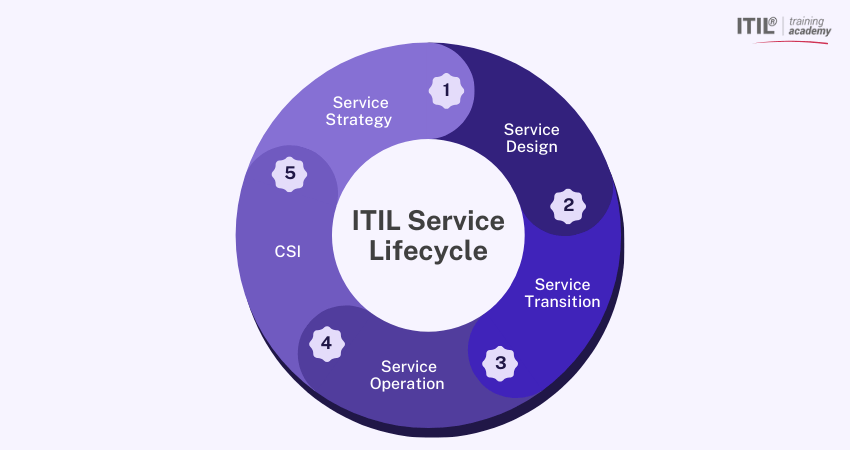
1) Service Strategy
Service Strategy defines the direction and objectives for IT services. It answers fundamental questions about value, customers, and priorities. Without this stage, the rest of the lifecycle might lack a clear strategic purpose.
2) Service Design
Service design takes strategic goals and turns them into detailed service plans. This includes architecture, processes, policies, and metrics needed to deliver services effectively.
3) Service Transition
Service transition focuses on moving new or changed services into the live environment. It ensures that changes are tested, risks are managed, and knowledge is transferred smoothly through proper training.
4) Service Operation
Service operation is where services are delivered and supported on a day-to-day basis. It focuses on stability, reliability, and efficient issue resolution.
5) Continual Service Improvement (CSI)
Continual Service Improvement ensures that services evolve over time. By measuring performance and identifying opportunities for enhancement, CSI helps organisations remain competitive and customer focused.
Take a practical approach to IT Service Management through ITIL® 4 Specialist: Plan, Implement and Control Training – Sign up soon!
Benefits of an ITIL Service Strategy
An ITIL Service Strategy supports business needs, uses resources wisely, and delivers reliable services. Let’s check some of its major benefits:
1) Optimised Utilisation of Resources
1) Helps allocate budgets based on business priorities
2) Reduces wasted time and effort on low-value services
3) Ensures skilled employees focus on the right initiatives
4) Improves use of tools, infrastructure, and systems
5) Supports better long-term resource planning
2) Consistent and Stable Service Operations
1) Sets clear expectations for ITIL service delivery
2) Reduces unexpected service disruptions
3) Improves the reliability of IT services
4) Increases user trust and confidence in IT
5) Supports smoother day-to-day operations
3) Ensures IT Aligns With Business Objectives
1) Connects IT goals directly to business goals
2) Helps IT support business growth and strategy
3) Improves communication between IT and leadership
4) Enables better decision-making across teams
5) Strengthens IT’s role as a strategic partner
4) Better Readiness and Smoother Service Transition
1) Identifies risks early during service planning
2) Improves preparedness for new or changed services
3) Reduces errors during service implementation
4) Ensures stakeholders are informed and aligned
5) Supports smoother handover into live operations
ITIL Service Strategy Challenges
While ITIL Service Strategy offers many benefits, organisations may face several challenges during implementation. It might include:
1) Resistance to Change: Teams may struggle to move from reactive working to a strategic mindset.
2) Lack of Stakeholder Involvement: Without support from business leaders, strategies may not reflect real business needs.
3) Difficulty Measuring Value: Benefits like customer satisfaction and risk reduction are hard to quantify.
4) Limited Awareness or Skills: Employees may lack proper ITIL knowledge or training.
5) Poor Communication: Weak collaboration between IT and business teams can slow progress.
How to Implement ITIL Service Strategy?
Implementing ITIL Service Strategy requires a structured and step-by-step approach. With the right planning and involvement, organisations can successfully align IT services with business goals. Here’s how you can implement it:
1) Secure Leadership Support: Ensure there is strong leadership involvement, actively supporting and guiding the strategy.
2) Define Key Roles: Assign responsibilities to roles such as Service Strategy Manager, Service Portfolio Manager, Financial Manager, Demand Manager, and Business Relationship Manager.
3) Structure Teams Effectively: Align service managers and process owners to support ITIL processes.
4) Manage Resources Wisely: Allocate people, budgets, and tools based on business priorities.
5) Implement Core Processes: Focus on service portfolio, financial, demand, and relationship management while integrating ITIL processes.
6) Train Employees: Provide ITIL training and encourage ongoing skill development in applying service strategy.
7) Communicate Regularly: Keep stakeholders informed and address concerns early. Strong communication builds trust and keeps everyone aligned.
8) Review and Improve: Treat implementation as an ongoing process and adjust strategy when business needs change.
Conclusion
ITIL Service Strategy provides the foundation for delivering meaningful, sustainable IT services. By focusing on value, alignment, and informed decision-making, it transforms IT from a support function into a strategic enabler. When implemented effectively, it helps organisations invest wisely, meet customer expectations, and adapt to change with confidence.
Build the skills to align IT with business strategy through ITIL® 4 Strategic Leader (SL) Training – Explore now!
Most Recent
Date - Jan 6, 2026
Date - Jan 5, 2025
Date - Jan 6, 2026